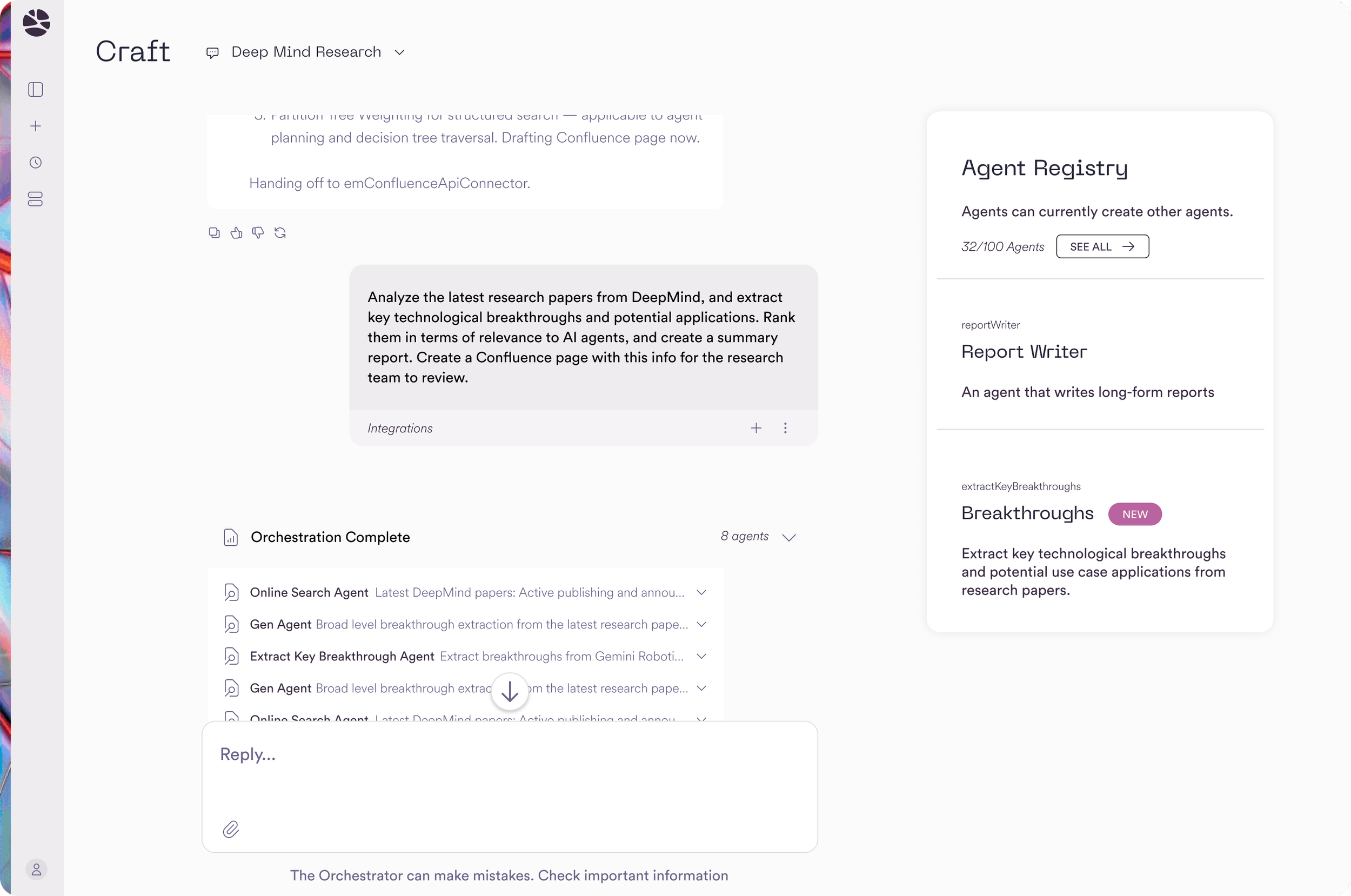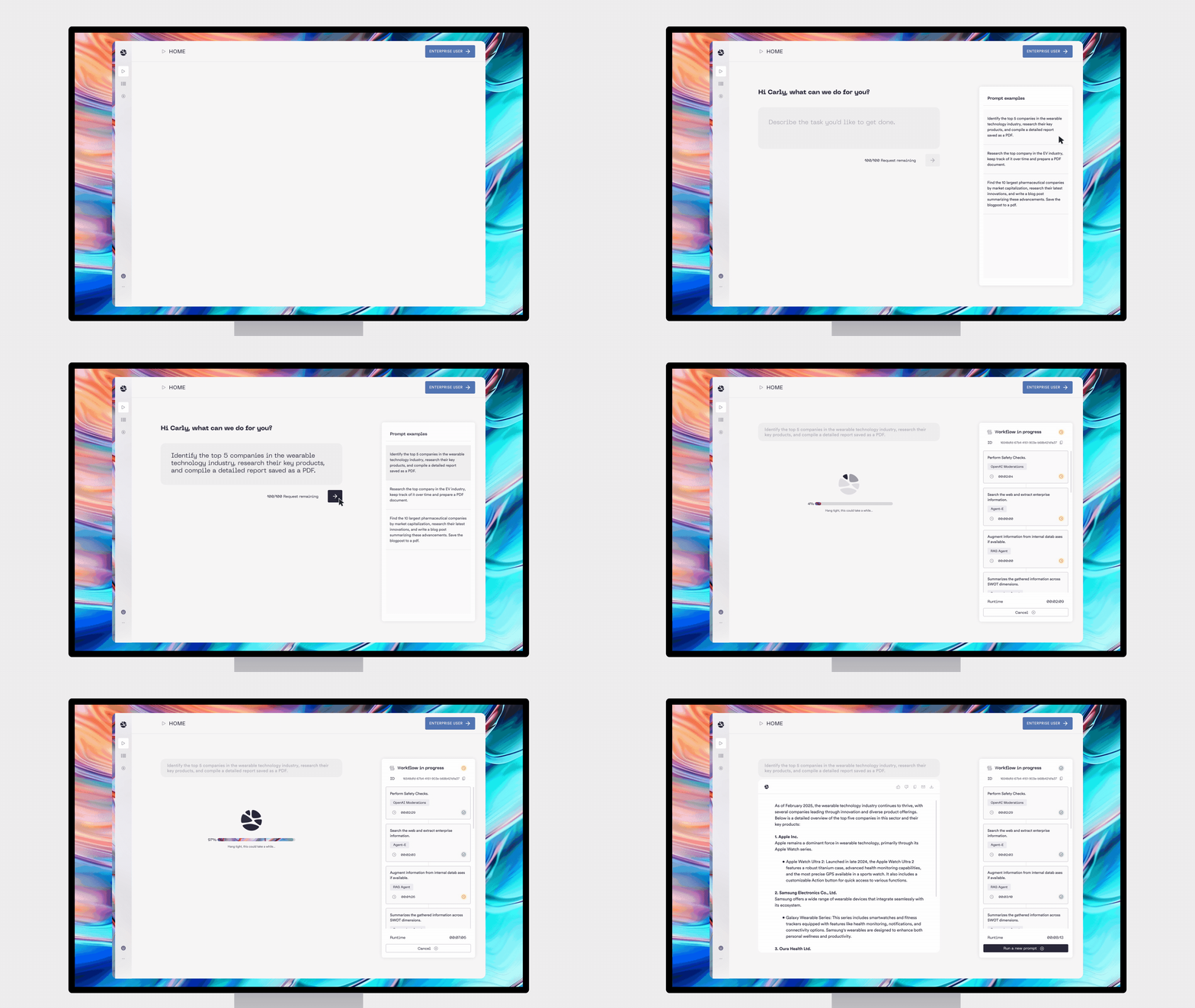
Early concept demo showing system feedback
Emergence AI Craft PlatformDesigning Trust for Agentic Enterprise Workflows
Define interaction models for a fundamentally new kind of product — one where the system acts on behalf of users, not just responds to them.
Context
With the mass adoption of LLMs, the market alignment for AI technologies shifted, and former use cases such as near-field voice and physical conversational interfaces were being adapted to model- and intent-based systems.
Operating in stealth mode and leveraging years of learning from IBM Watson and Merlyn Mind voice-enabled classroom assistants for K-12 EdTech, the company was now looking to expand into cross-vertical enterprise agentic use cases.
Opportunity
This entailed leveraging the existing tech stack to minimize R&D spend while applying UXR methodologies to market-traction research for use-case identification.
Through close partnerships with investors, leadership, engineering, AI research teams, and revenue teams, use cases were built out and experiments launched to validate model reasoning and demonstrate concepts to investors.
Challenge
It was a race to capture market share in a burgeoning landscape with little precedent for how user expectations would affect adoption and usage. The nature of the emerging landscape meant that there was no playbook, no traction data, no competitor comps, and no limits on how we handled interactions with the system.
Given the range of use cases, assumptions were made about the amount of system feedback and transparency needed. This led to explorations into trust in the agentic systems being built.
CIO Priorities Driving Spending
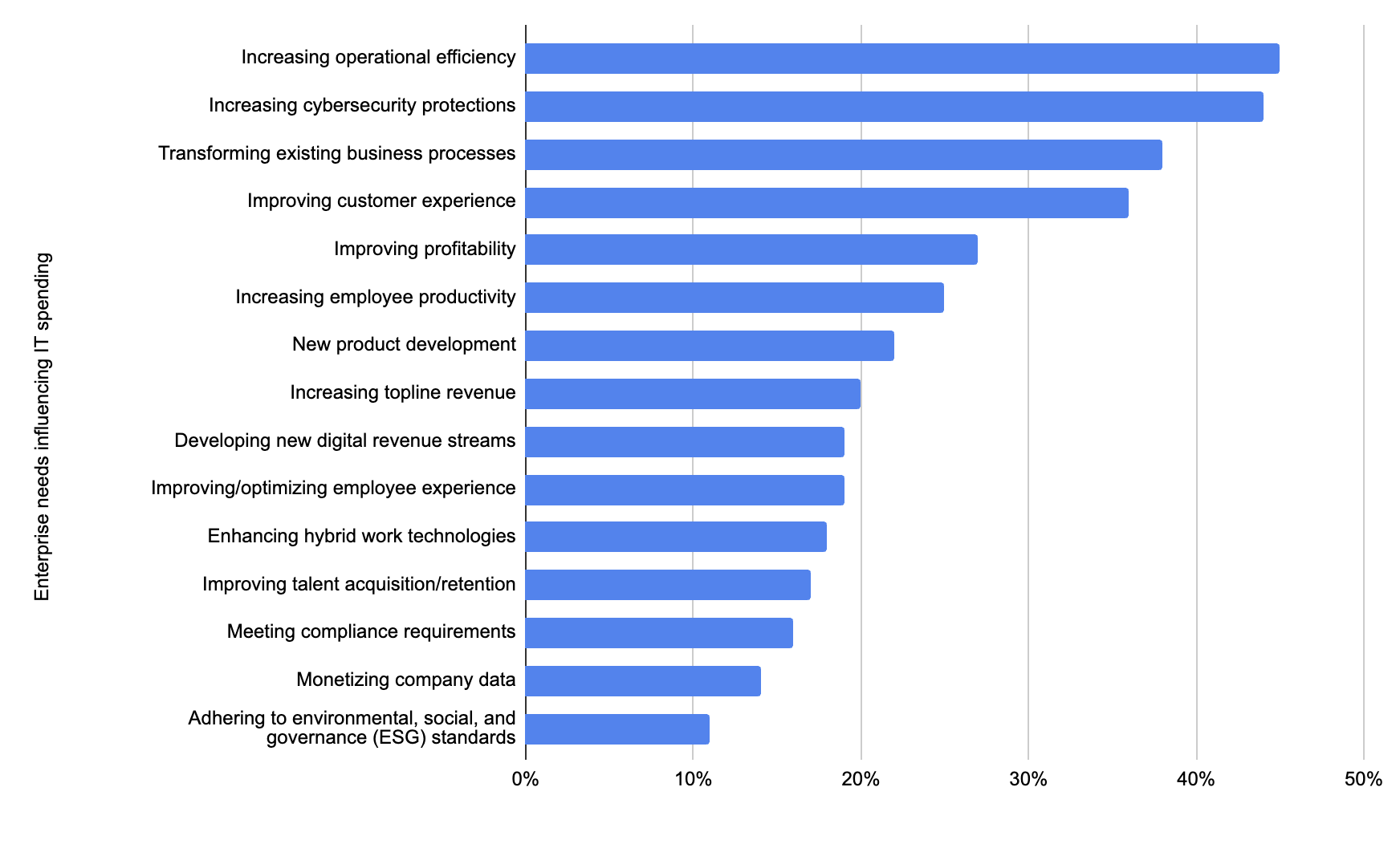
Cross vertical expansion revenue drivers
Rapid prototyping, agentic workflow, and model testing from engineering teams.
Task
Build an interface that makes AI reasoning legible, actionable, and trustworthy at each step — without hiding the system's assumptions or removing human judgment.
Moments when automation must pause, surface its reasoning, and give control to the user.
Trust Breakpoints
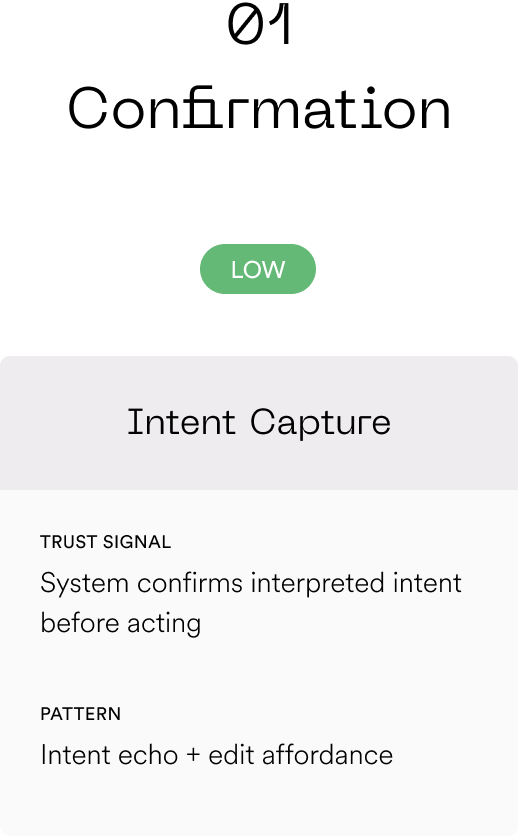
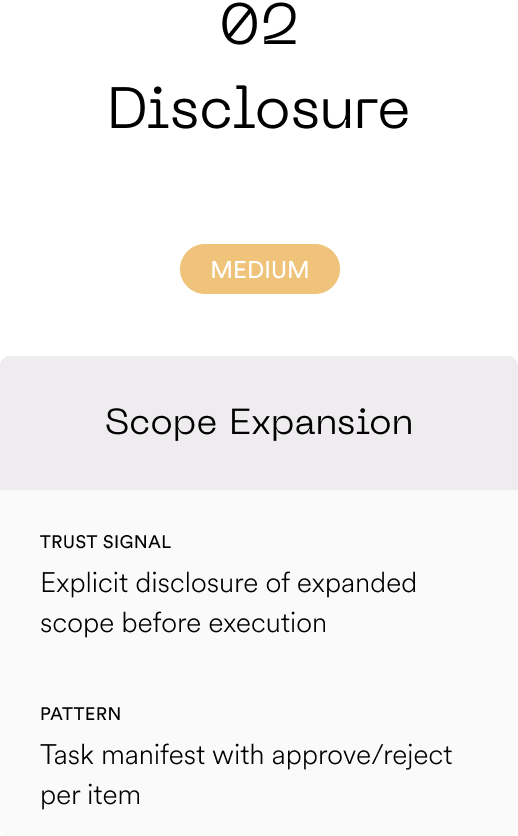
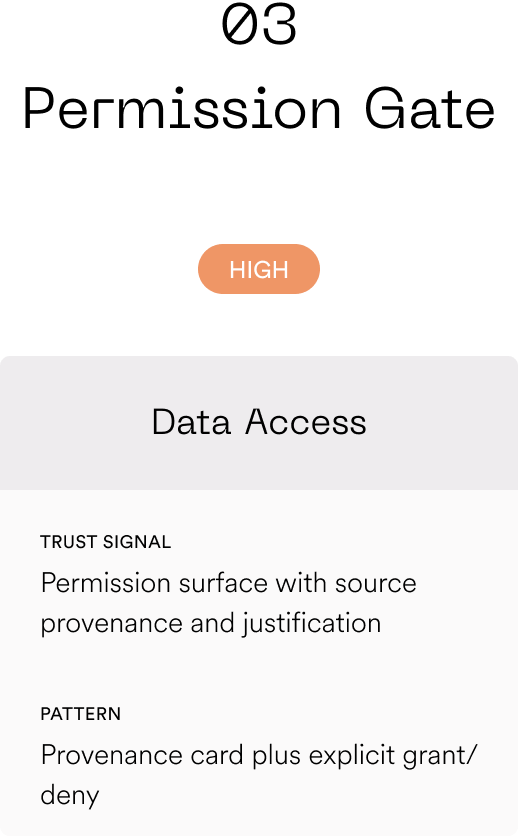
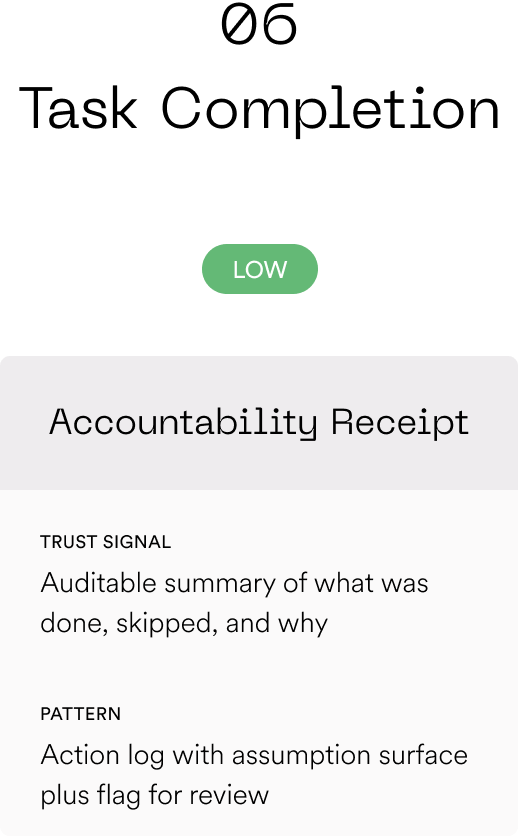
I mapped the trust breakpoints- the moments when users needed to understand what the agent did, why, and what they could override. From there, I experimented with a pattern library of explainability states: confirmation flows, fallback surfaces, and progressive disclosure for multi-step agent tasks.
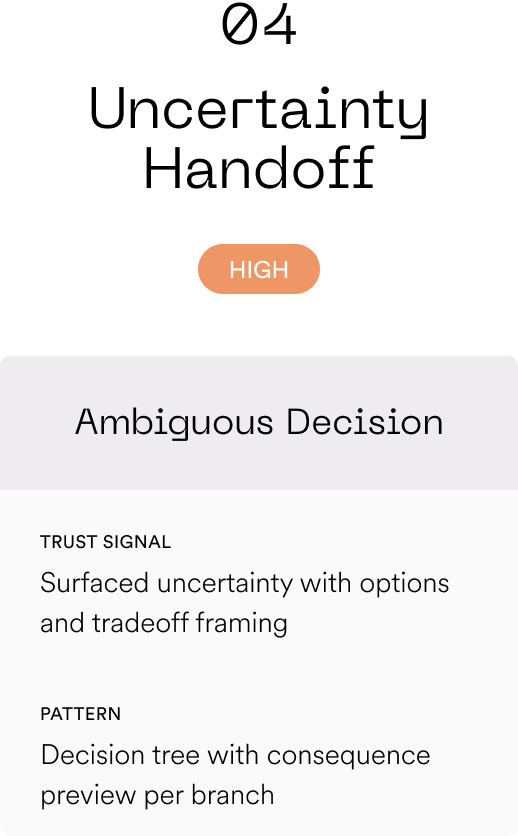
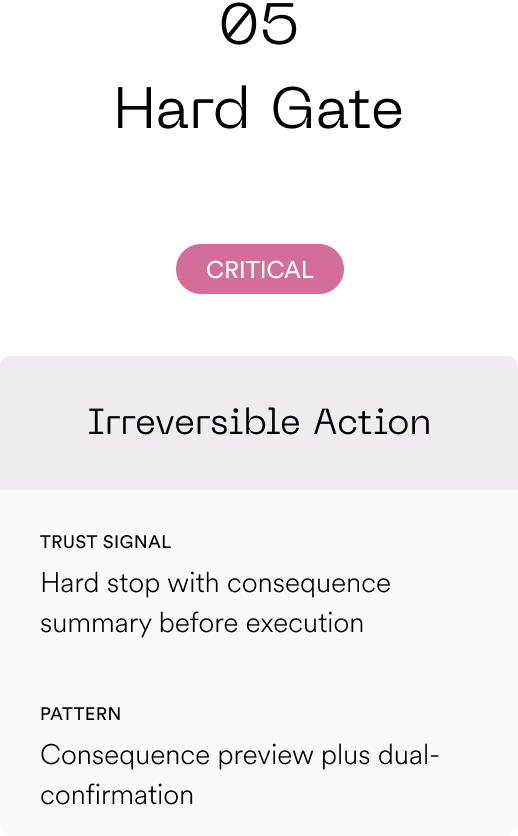
Use Cases
Self-propagating and user-generated research agents.
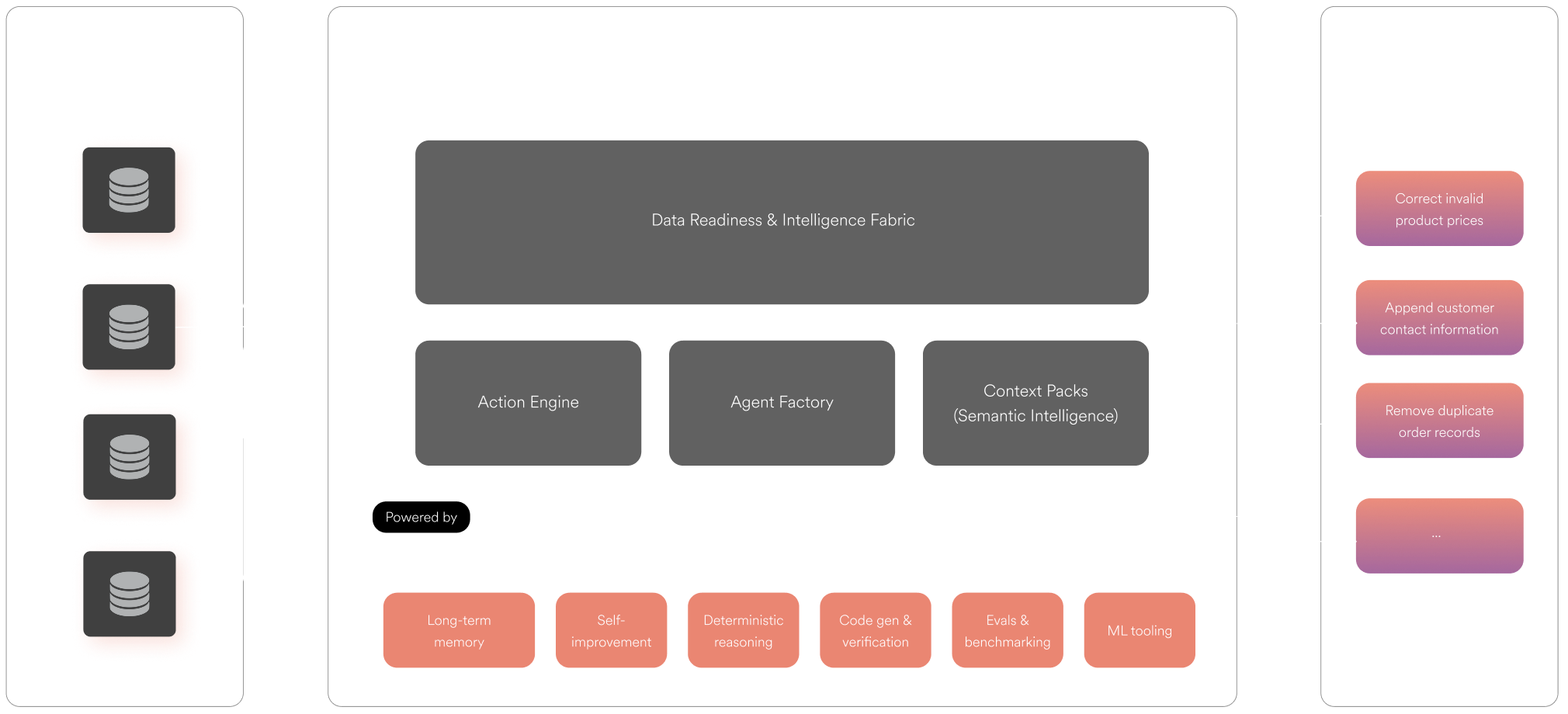
Enterprise data-readiness with semantic intelligence and an ability to talk to your data.
Results
As a team, we launched Emergence AI out of stealth mode, designed the Emergence Orchestrator platform and playground environment, and helped secure $97M in Series B funding.